Before we talk about common ledger vs. trial steadiness, you should find out about double-entry accounting. An imbalance can happen when a transaction is not recorded in the basic ledger. If a transaction gets missed or overlooked, it won’t be reflected in the trial balance. As the enterprise grows and the number of accounting staff will increase it’s impractical to have just one ledger. In these circumstances it isn’t uncommon to separate off sections of the primary ledger into separate subledgers. Only the final three columns debit, credit, and steadiness include monetary quantities.
Use the ledger to sort and summarize your whole enterprise transactions to get a transparent image of your funds. Your basic ledger gives detailed info on all the transactions in your chart of accounts. Working a business means juggling quite lots of monetary reports, like your company’s trial stability and general ledger.
It captures every transaction, offering general ledger vs trial balance an entire and detailed picture of a company’s financial health. Each general ledgers and subsidiary ledgers are an essential a half of an entity’s accounting system. The subsidiary ledger accounts act as an intermediary between the journal and the general ledger accounts whereas the final ledger is the pathway to the trial stability.
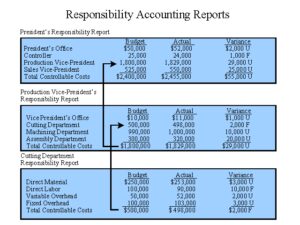
Moreover, the Basic Ledger serves as a hub for posting and adjusting journal entries, reconciling accounts, and making ready tax returns. Its comprehensive nature ensures that every one monetary information are accurate and up-to-date, adhering to regulatory necessities and facilitating clean audits. This report exhibits the entire property, liabilities, and all of your accounting items organized primarily based on the debit and credit duality. You have management by way of search settings to review the account you need to see in the common ledger.
Common Ledger Vs Subsidiary Ledger
Every debit and credit score of every journal entry is posted both to a basic ledger or a subsidiary ledger or a mixture of each. Common Ledger and Trial Steadiness have similarities – they both document monetary transactions. The General Ledger has extra element, while the Trial Balance offers a ‘snapshot’ of the finances. The Overall Ledger offers a clear audit path, allowing businesses to hint the origin of every transaction and determine errors or discrepancies. Nevertheless, it doesn’t explicitly highlight errors in the recording of transactions.
- The journal is where you make the changes, whereas the ledger reveals the ultimate, corrected results.
- The basic ledger can also be used to create monetary statements like the steadiness sheet and revenue assertion.
- By identifying these errors, the Trial Balance allows businesses to rectify them before preparing monetary statements.
- “Total Credits” represents the sum of all credit balances across all accounts.
- Each buyer account will include all of the important monetary information associated to the transactions between it and the corporate.
Such uniformity guarantees that there are not any unequal debits and credit which have been incorrectly entered during the double entry recording course of. However, a trial steadiness can not detect bookkeeping errors that aren’t simple mathematical errors. The common ledger categorizes transactions by account, providing granular detail in regards to the nature of every monetary occasion. This allows for in-depth evaluation of particular areas like asset acquisition, liability administration, and revenue technology. The trial steadiness, on the opposite hand, summarizes these individual account balances into debit and credit score columns.
Keep Up To Date On The Most Recent Accounting Tips And Coaching

An instance of a ledger is a company’s basic ledger, which contains all of its asset, legal responsibility, owner equity, income, expense, gain, and loss accounts. Each account accommodates the transaction quantities that pertain to the account title. Financial reports depend on actual monetary information, not simply guesstimates or forecasts.

There aren’t any special conventions about how trial balances should be ready, and they could additionally be accomplished as often as a company needs them. The basic ledger holds data about every transaction, such as date, accounts, and quantities. The trial balance double-checks the ledger by summarizing account balances, and making sure the debits match the credit. A basic ledger is the master set of accounts that summarize all transactions occurring within an entity.
The purpose of the overall ledger book is to offer a everlasting document of all monetary transactions and balances categorised by account. By utilizing both instruments correctly, entities ensure transparency and dependability in their accounting practices. When it comes to managing monetary records, businesses rely on numerous tools and methods to ensure accuracy and transparency. Two essential elements of monetary accounting are the Basic Ledger and Trial Balance. While each serve distinct purposes, they’re interconnected and play an important role in maintaining the monetary health of a corporation. In this text, we will discover the attributes of the Common Ledger and Trial Steadiness, highlighting their variations and similarities.
It holds a complete record of transactions, grouping them into various accounts primarily based on their kind. This centralized database permits for the tracking of revenue, expenses, belongings, liabilities, and fairness. With an orderly basic ledger, companies could make monetary statements and informed choices. As you can see, the entire debits equal the whole credit on the trial balance, which implies our general ledger is in steadiness. This trial steadiness now provides a clear overview of the ending balances in each account, which would be used to prepare the monetary statements. One of the important thing attributes of the Common Ledger is its capacity to supply a whole https://www.quickbooks-payroll.org/ and correct picture of a company’s monetary place.

Add comment